
Communication
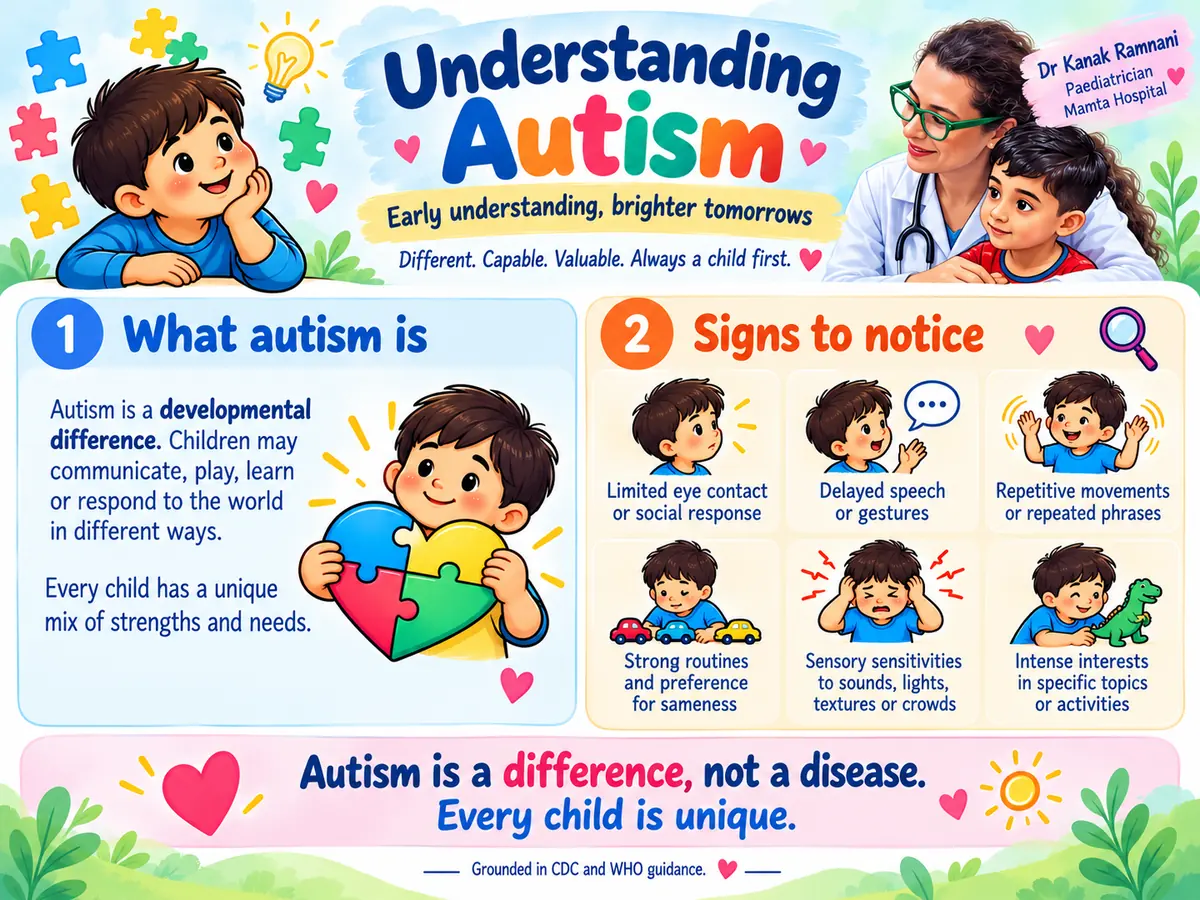
A child may communicate differently through speech, gestures, pictures or other ways.
Explore autism with curiosity, respect and practical ideas for family life. Early understanding helps caregivers recognise needs and build on each child’s strengths.

Autism is a neurodevelopmental condition. Autistic children may communicate, interact, learn, move or experience sensory surroundings differently. They have varied strengths, preferences and support needs, which can change over time.
A child may communicate differently through speech, gestures, pictures or other ways.
Children connect and express affection in different ways, including their own preferred styles.
Some sounds, lights, textures or crowds may feel unusually intense or comforting.
Repetition, predictable routines and focused interests can be an important part of daily life.
One trait alone does not diagnose autism. If you have concerns, talk with your child's paediatrician.
Show what comes next with pictures, simple schedules or predictable transitions.
Use short directions, pictures or a preferred communication method. Give time to respond.
Notice sounds, lights, textures and environments your child finds overwhelming or reassuring.
Make learning and shared activities meaningful by starting with things your child enjoys.
Connect through play at your child’s pace, without forcing eye contact or social behaviour.
Notice what brings your child joy, pride and confidence while supporting areas of need.
Visual supports, flexible routines, preferred interests, communication tools and sensory accommodations may help. Work with your child's team to choose an approach that respects their autonomy and comfort.
Explore attention & learning guides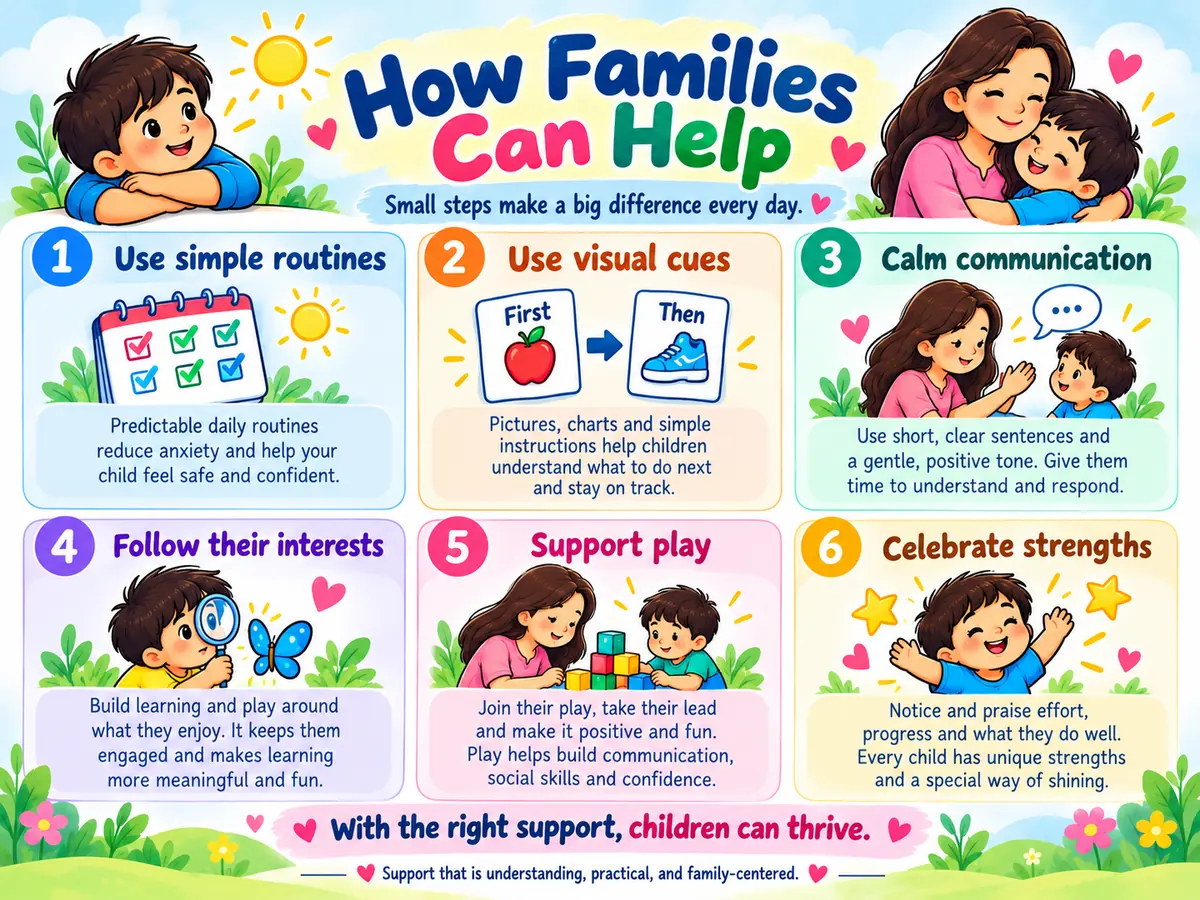
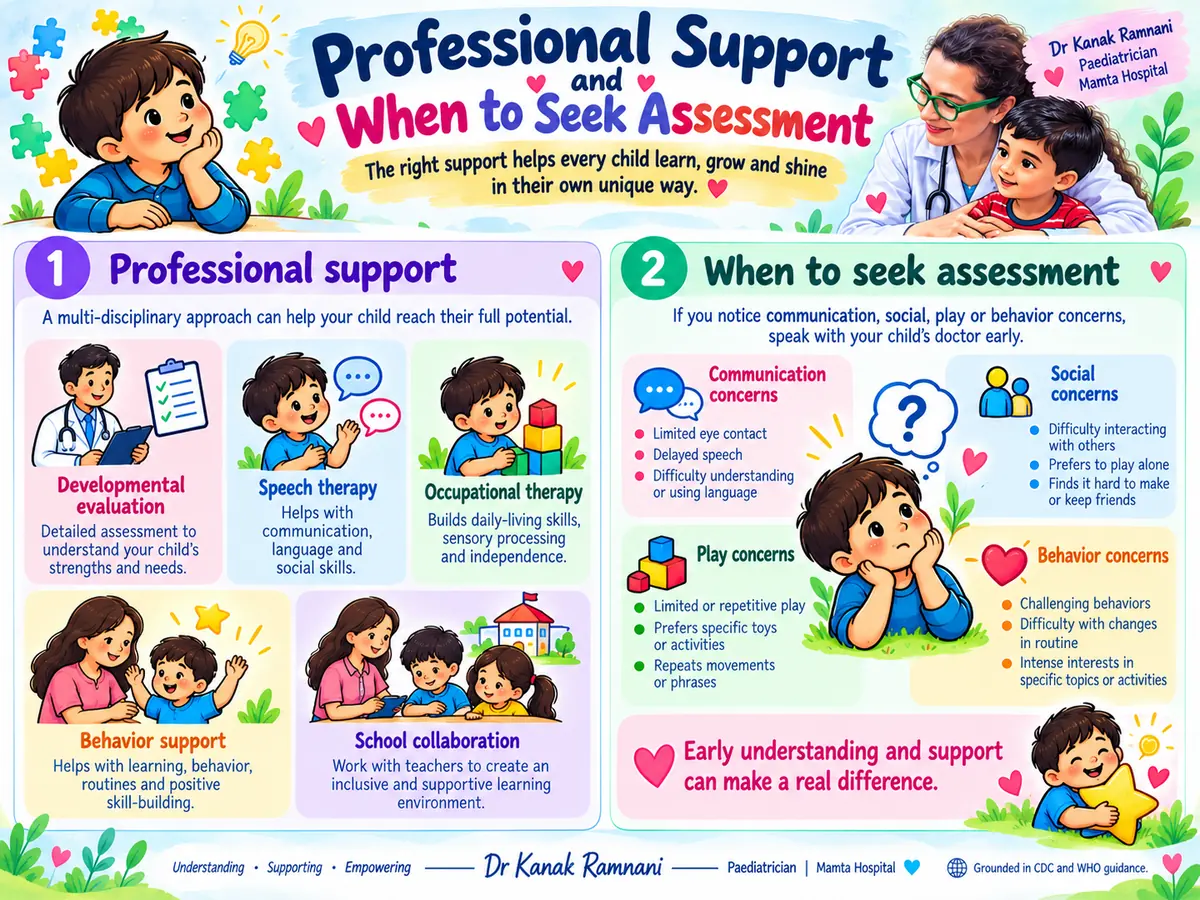
Speak with your child's doctor if you notice persistent concerns about communication, social interaction, play, behaviour, sensory experiences, or loss of previously acquired skills. You do not need to wait for a particular age to raise a concern.
Note examples, strengths and changes over time.
Share what you see at home, nursery or school with a paediatrician.
Ask whether developmental assessment or referral would be helpful.
American Academy of Pediatrics recommendations cited by CDC include autism screening during well-child visits at 18 and 24 months. Children with concerns can be assessed at other ages too.
Individual support might involve developmental evaluation, communication support, occupational therapy, family coaching or school accommodations, as clinically appropriate.
Autism is not caused by parenting style, and support should focus on quality of life and meaningful participation.
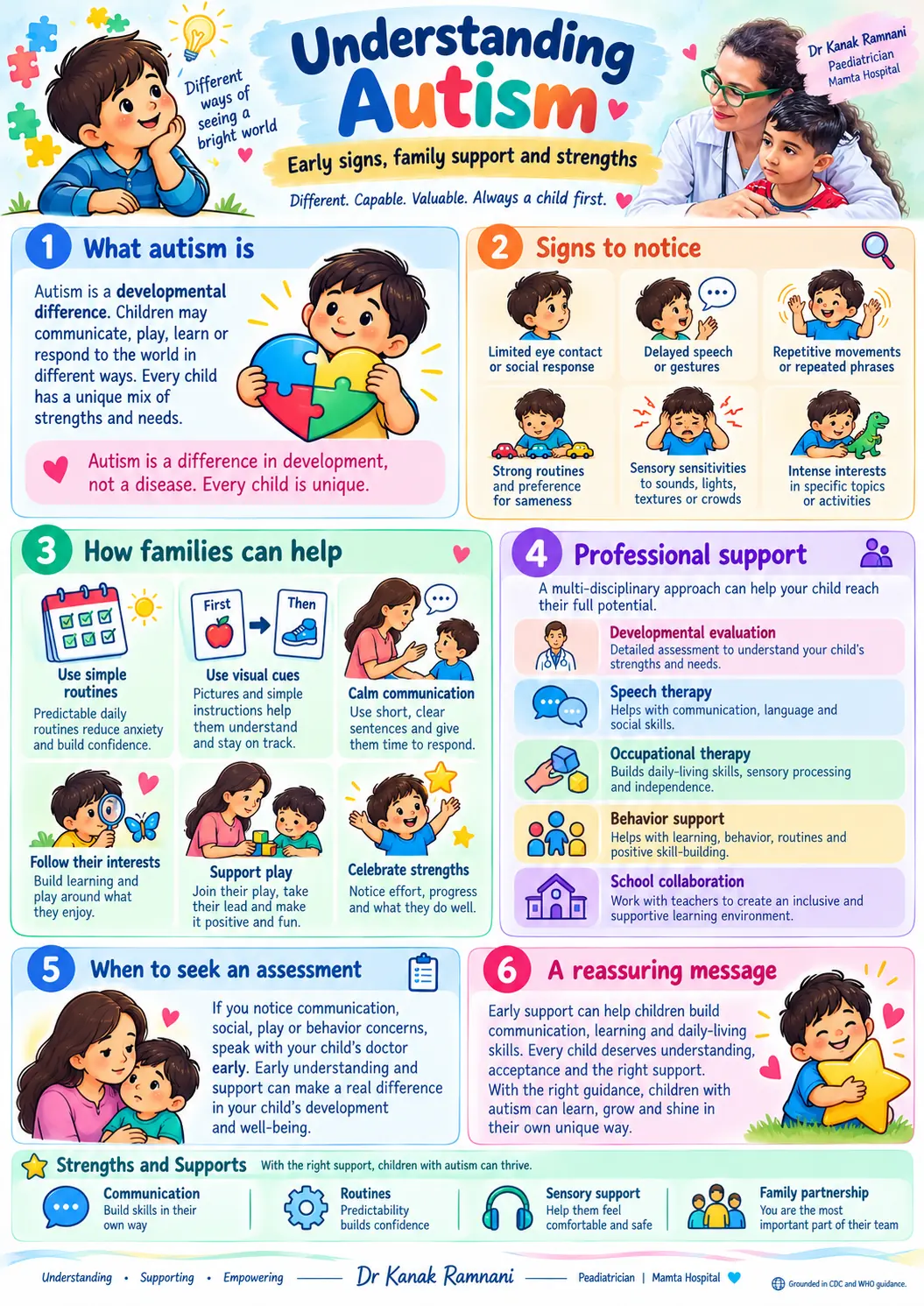
These illustrations are learning aids, not photographs of an actual patient or a diagnostic checklist. A qualified clinician can help understand your child’s individual development. Support should be collaborative, respectful and tailored to the child.
If you are noticing developmental differences, bring your observations and questions to a child-health consultation.
Plan a visit with Dr Kanak at Mamta Hospital, Raipur.