
Listen without rushing
Offer a calm moment to share feelings, without immediately trying to fix everything.
Stress visits every family. Discover everyday ways to help children feel heard, protect family routines and make space for small moments of calm.

Stress may show up as irritability, tiredness, tension, sleep changes, or trouble concentrating. A child may not always have the words to explain what is happening.
Offer a calm moment to share feelings, without immediately trying to fix everything.
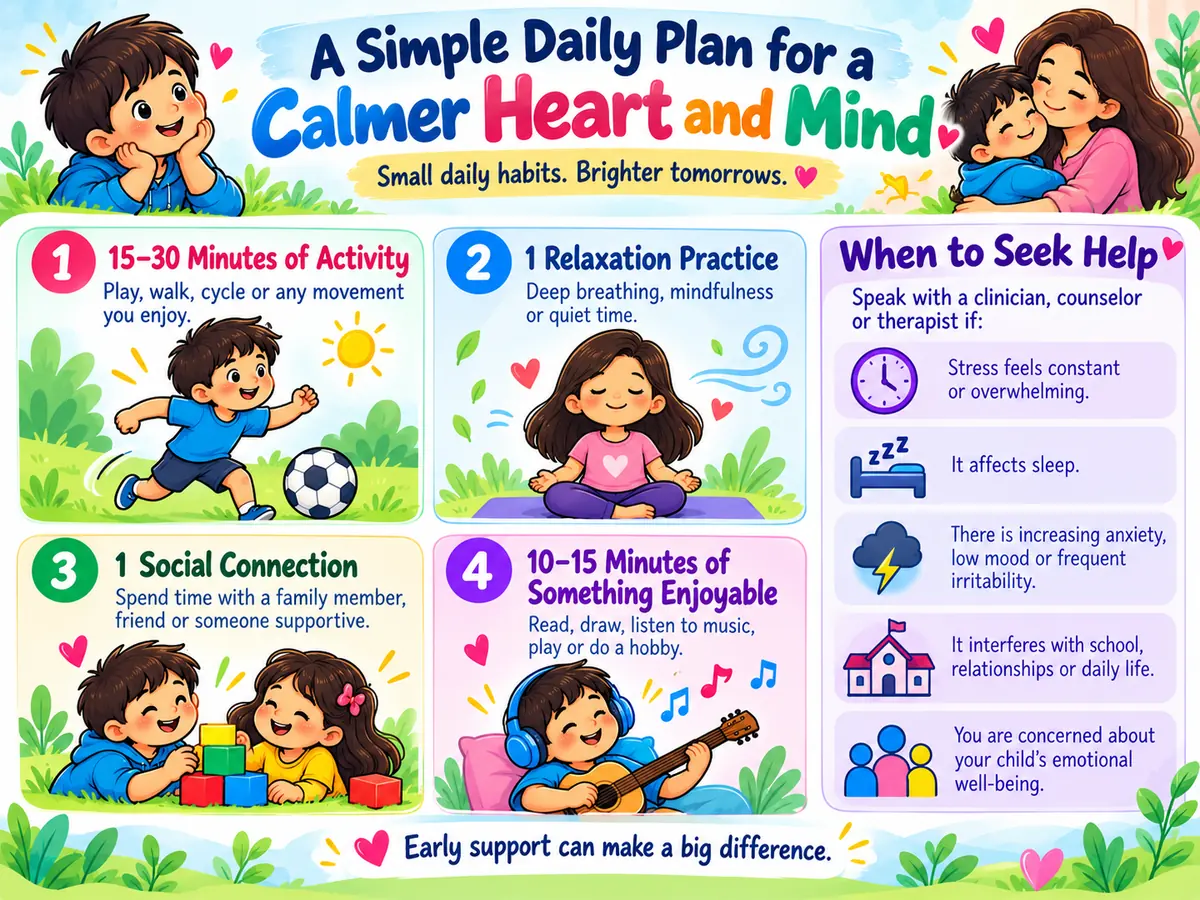
A walk, outdoor play, or enjoyable movement can help everyone reset.
Regular sleep and predictable daily rhythms help children feel secure.
Talk to trusted family, friends, teachers or care professionals when needed.
Adapt each step for your child’s age, comfort and sensory needs. The goal is connection, not instant perfect behaviour.
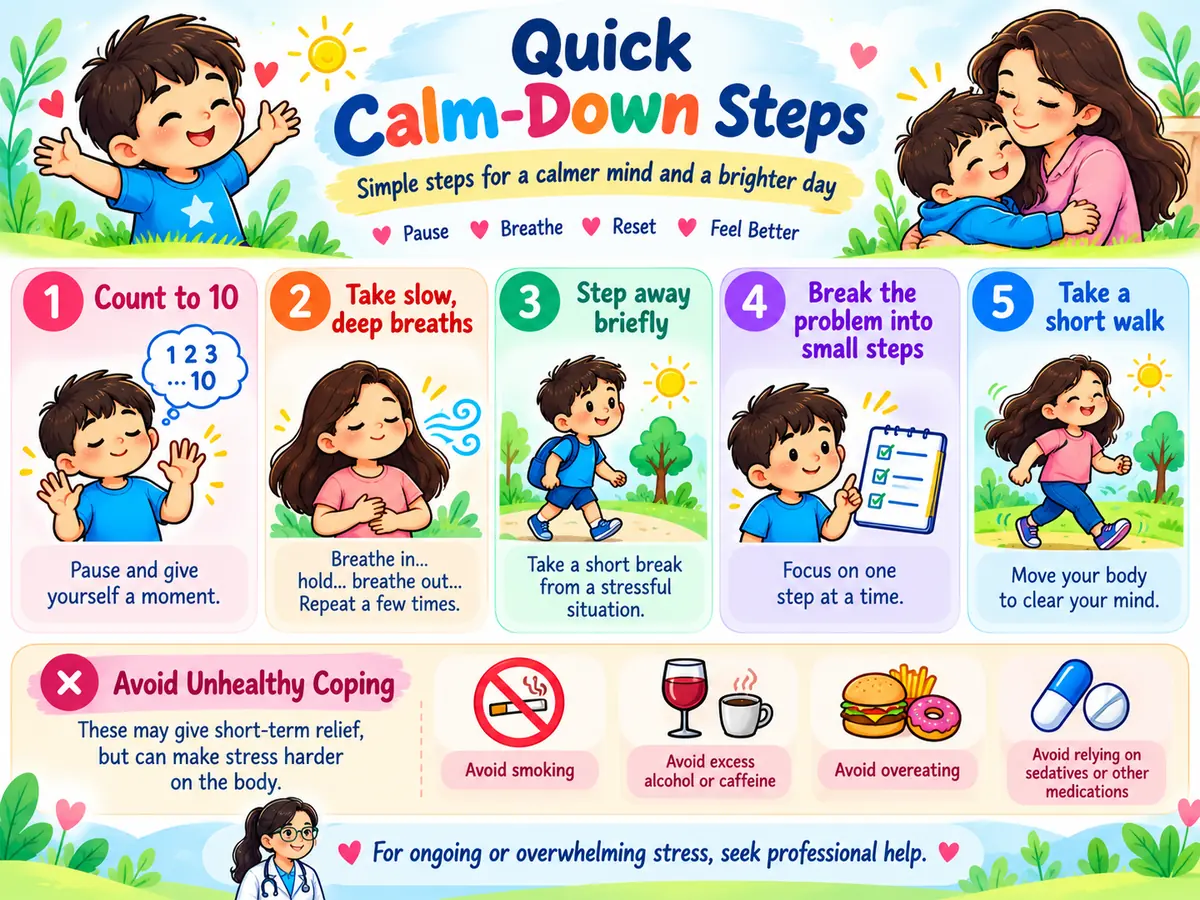
Count slowly or name the feeling before reacting.
Try a few slow, relaxed breaths. Never force breath-holding.
A quieter space or a moment outdoors may help.
Break a problem into its next manageable step.
Offer a listening ear, a cuddle if welcome, or a trusted person.
Choose play or activity that suits your child and feels enjoyable.
Try quiet time, mindful noticing, gentle breathing or a soothing story.
A shared meal, conversation or play can strengthen connection.
Music, art, reading, games or nature can create a helpful daily pause.
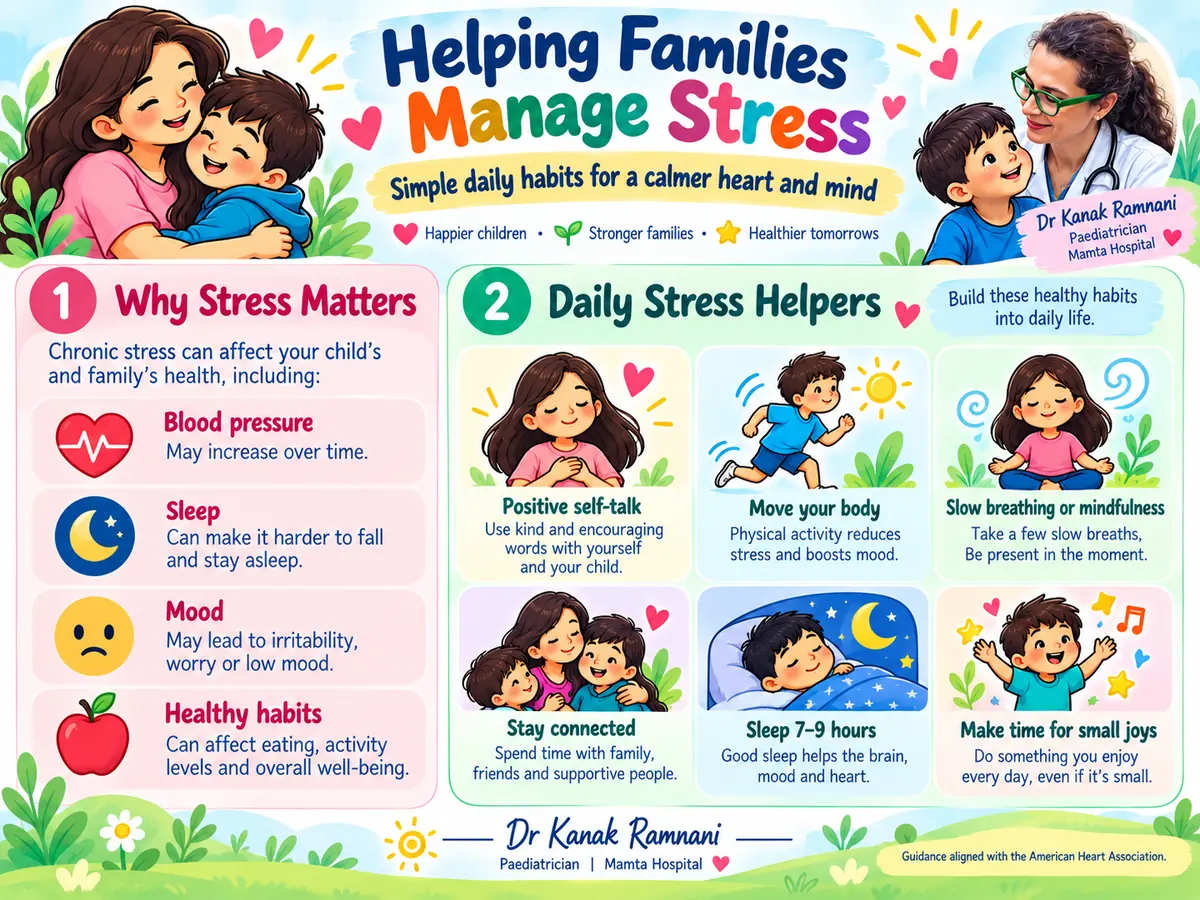
The American Heart Association’s 7–9-hour guidance applies to adults. Children’s needs vary by age:
Build a regular bedtime routine and discuss persistent sleep difficulties with your child’s doctor.
Use this illustrated summary to start a conversation. The 7–9-hour sleep recommendation printed inside this particular graphic is for adults, not children. For your child, follow the age-specific sleep guidance above.
When to ask for help: If stress is persistent, affects school or relationships, disrupts sleep, or feels overwhelming, contact a qualified healthcare professional. Adults should not change prescribed medicines without medical advice. These tools support wellbeing but do not replace treatment.
Speak with Dr Kanak’s team if stress, sleep or emotional wellbeing is troubling your child or family.
Plan a visit with Dr Kanak at Mamta Hospital, Raipur.